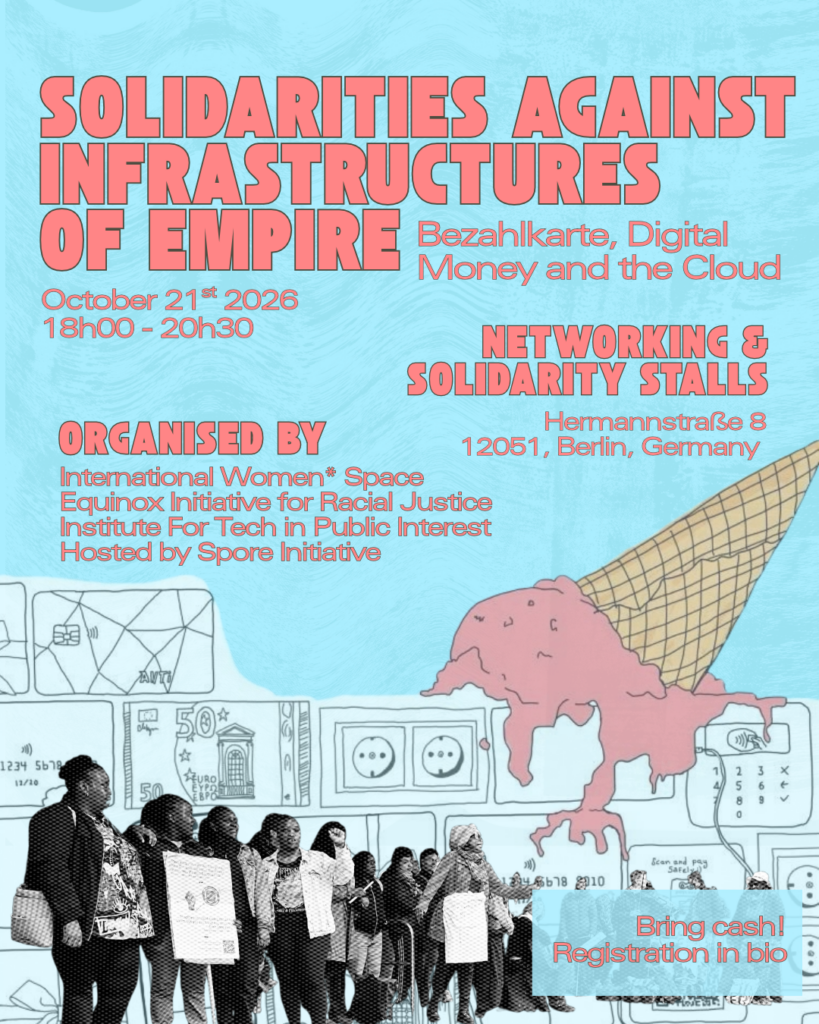
Solidarities Against Infrastructures of Empire Bezahlkarte, Digital Money and the Cloud
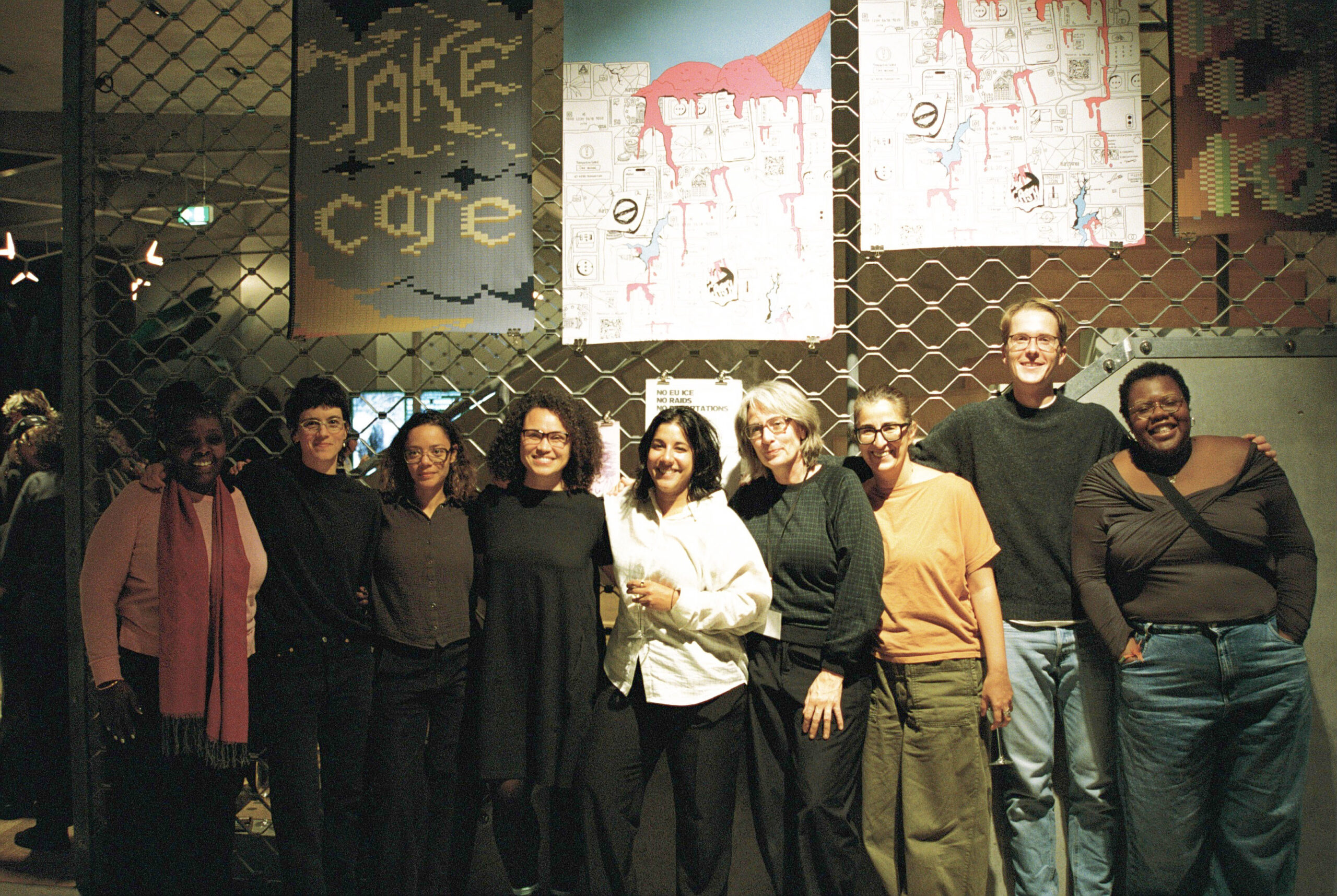
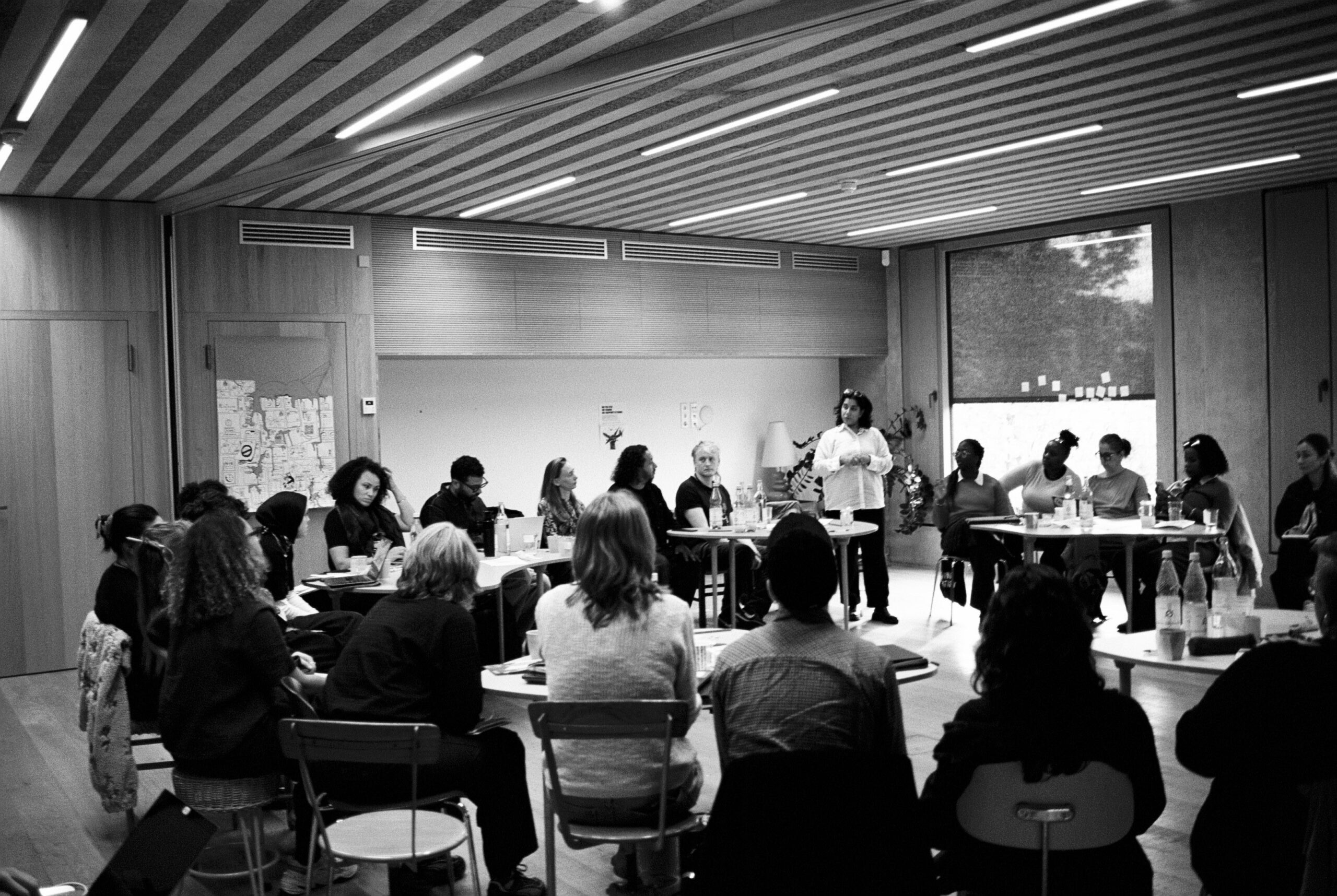
Between 20-21st October, the Tech Infrastructure Coalition hosted its first “Operations Room” exploring the connections between asylum benefits, the digitalisation of public services, and the infrastructural power of technology companies. Partnering with the International Women* Space, we gathered to understand, build coalitions, resist and abolish infrastructures of digital empire.
The gathering – an “Operations Room” organised with The Institute for Technology in the Public Interest and International Women* Space brought together political organisers, people seeking asylum, researchers, technologists and journalists, from across Europe.
In an Operations Room, we use creative methods to collectively examine the way a technology works, the changes it brings about and who benefits from them, to map together its impact on communities and institutions; and identify ways to contest the technology and its political and economic enablers.
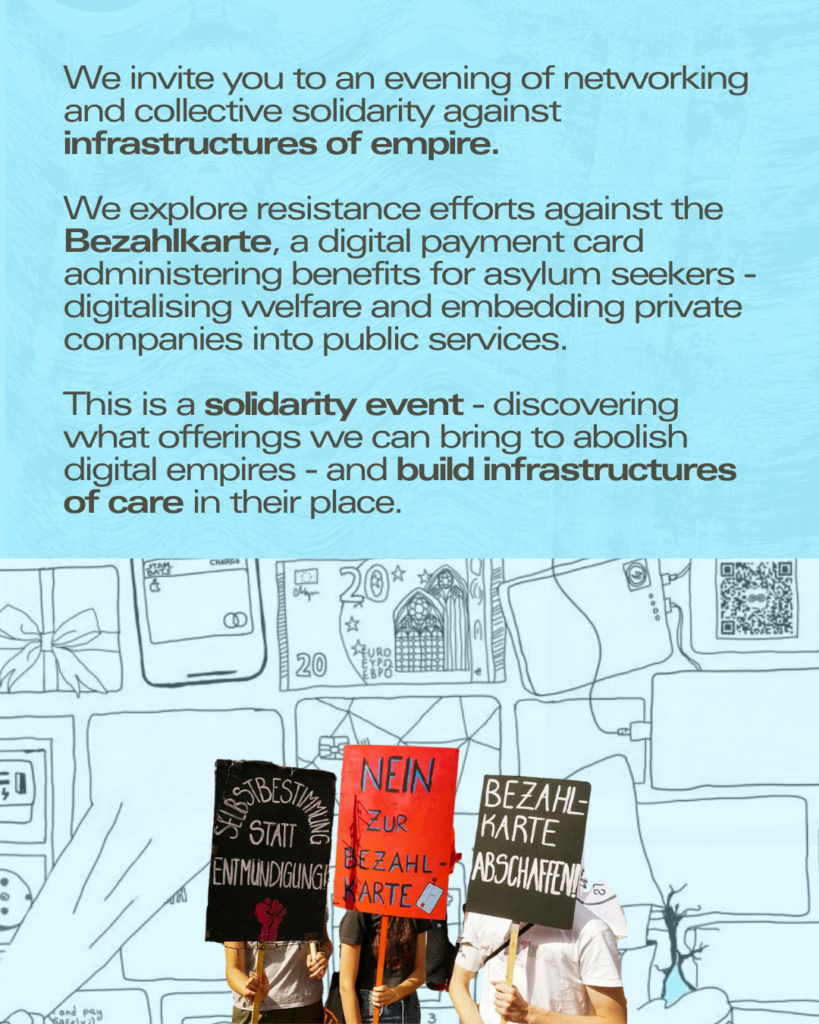
The focus was the Bezahlkarte, a pre-paid plastic card transforming the way Germany rolls out asylum benefits. In our collective research, the contestations of migrant-led organising in Germany, and our two days together, we found that the Bezahlkarte was the entry point to explore the impact of digitalisation on society, and in particular public institutions’ capacity to monitor and contain communities.
Bezahlkarte: digital money as containment
The Bezahlkarte is a prepaid card first introduced in Thuringia in December 2023, as a replacement for cash allowances paid to people in the asylum system. As of August 2026, districts in every state across Germany had rolled out versions of the Bezahlkarte, in the stated name of administrative efficiency and tackling fraud international smuggling and human trafficking. It was introduced following a series of routes along the scale of reform and abolition – before the Bezahlkarte, there was a chip-card and a voucher system imposed on people seeking asylum – forms of control that profoundly limited agency and increased the stress of everyday life.
They were both abolished after years of organising calling out the enabling legislation the Asylum Seekers’ Benefits Act, passed in 1993 as a punitive measure intended to restrict asylum rather than improve lives.
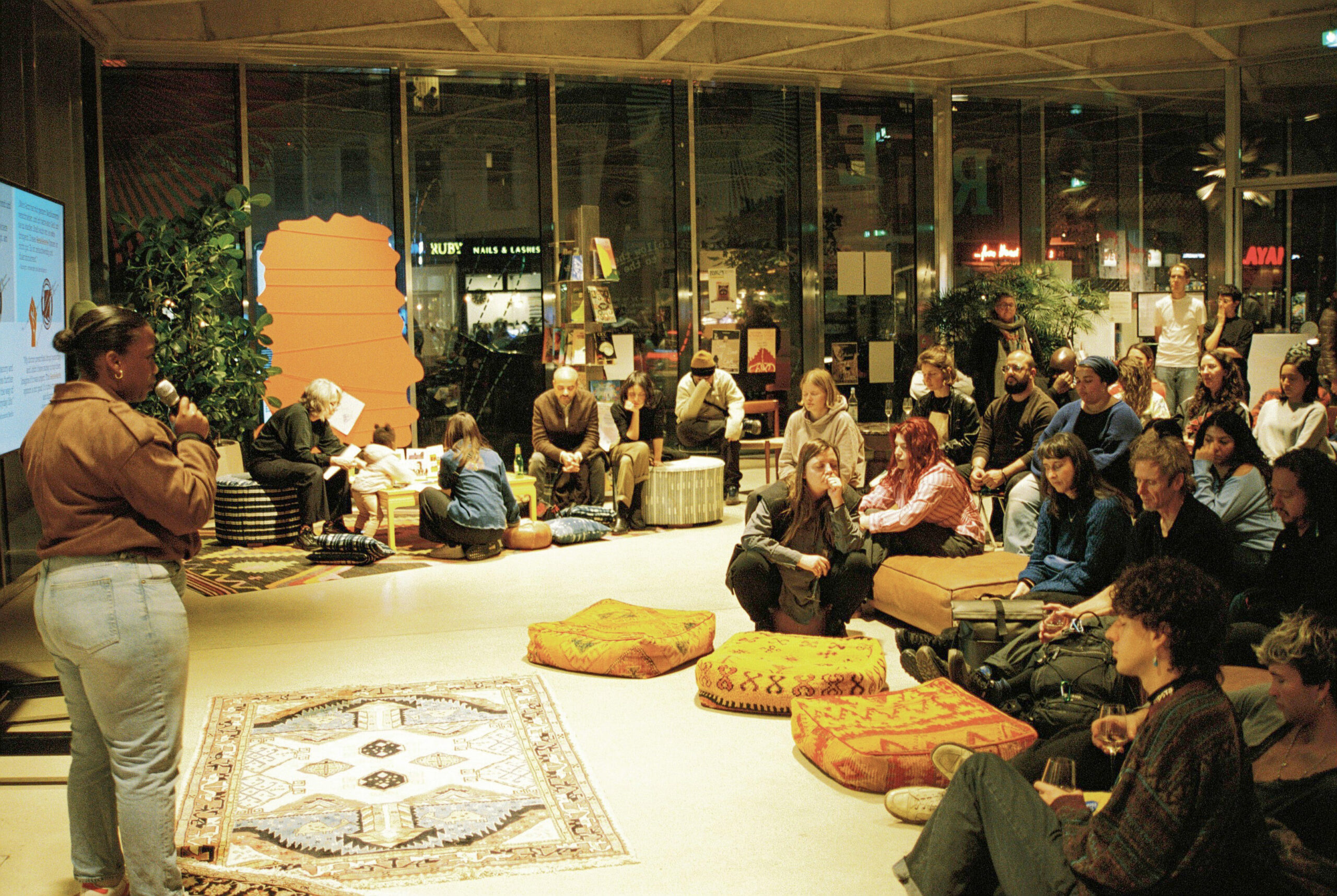
Kúi speaks at the public event about the political organising led by migrant women against the Bezahlkarte.
When hearing from those forced to use it, the rationales of the German government became clear: containment, impoverishment and the worsening of people’s lives as a means of immigration deterrence.
Women spoke of the devastating impact of the card, which obliged them to have a smartphone to download an app to track their balance. A card configured so its users can withdraw just 50 euros of cash each month – not enough to pay for the 63 euro monthly public transport pass. A card that blocks overseas transfers and thus the ability to send funds home to support loved ones. A dark blue card that immediately brands its holder as an asylum seeker. One mother explained that she avoids going to local fairs with her small child because she can’t use her card to buy her ice cream or a balloon. Another shared that the tight restrictions on cash in a still cash-dominant context of Germany, and challenges navigating the app, lead her and others into relationships of dependence that are ripe for exploitation.
“One mother explained that she avoids going to local fairs with her small child because she can’t use her card to buy her ice cream or a balloon.”
Digital payment and the transformation of the state
We view the Bezahlkarte as a computational infrastructure: a digital tool backed by software manufactured in the cloud, used through devices like smartphones and the terminals shopkeepers need to process card payments. That software is programmed to control how the card is used.
The Bezahlkarte brings a form of digitised control to money that surpasses previous systems. It opens the door to a long list of companies that position themselves as essential to the delivery of public services. Publk, a German payment company involved in providing the Bezahlkarte to districts under the brand SocialCard, boasts of its “user-friendly smart card solutions”, tested on asylum seekers and ready to be deployed to serve the needs of schools, students, recipients of worker benefits and other groups. Visa, another SocialCard partner, has a long history of working with government agencies to deliver monthly allowances to asylum seekers, claiming that their “secret sauce” is the ability to offer tailor-made restrictions on how, where and for what a card can – and cannot – be used.
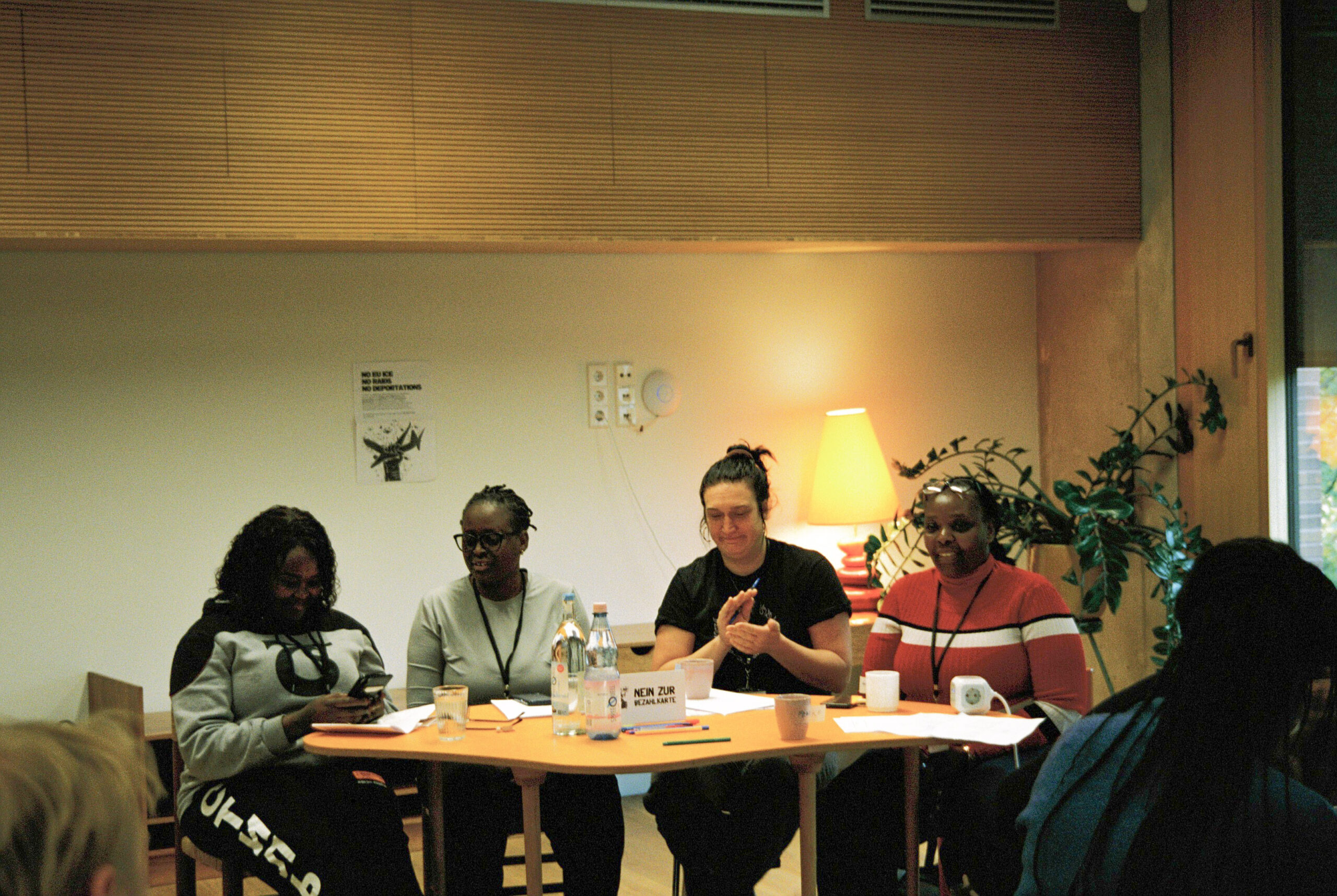
Jane, Achieng, Emily (Flüchtlingsrat Berlin) and Jennifer (International Women* Space )- Panel of users of the card and political organisers in Germany organising against the Bezahlkarte.
The Bezahlkarte is an example of the modern merging of digital payment and public institutions, and how “welfare state services have become markets for the financial services sector”. Public institutions across the world are literally buying into the neoliberal story of “modernisation” and improved “efficiency” of public administrations through digitalisation, while being seduced by the argument that digitalisation offers new ways to exercise control over different segments of their populations. We see this in Australia, where for two decades the BasicsCard has been used to “quarantine” the income of Aboriginal communities to limit their spending patterns, in Lebanon where benefits of refugees are restricted to World Food Program-contracted retailers, and in the US, where states are being pushed to implement costly chip-enabled cards to replace existing magnet-strip cards used for food assistance, purportedly to deter fraud. These examples speak to the need to politicise money, and the profound implications of its transformation from analogue (cash) to card (digital). One participant cited Viviana Zelizer’s book The Social Meaning of Money as a reminder that money has never been socially neutral:
“American welfare experts have persistently viewed charitable cash as a redoubtable, multi- faceted currency. In the hands of the morally incompetent poor, experts have declared, money could turn to a dangerous form of relief, easily squandered for immoral purposes. Indeed, for most of the 1900s, state agencies as well as private charities directly regulated the household economy of the poor, allocating clothing, fuel, and food to the needy, but seldom cash. Or else … agencies dispensed grocery orders that specified not only which goods recipients could purchase but also where to buy them.”
Abolish the Bezahlkarte, abolish borders…abolish the cloud?
Central to our discussion was the punishment politics embedded in the Bezahlkarte, an example of a form of “prison fix”. Continuing Germany’s repressive migration politics into the welfare space, both replicating and replacing detention centres, the Bezahlkarte replicates a form of prison in everyday life, with the combined role of the state, the digital companies and the social worker to play roles of issuer, watcher, gatekeeper and punisher for those navigating these systems, straddling notions of care and punishment.
The digitalisation of migration benefits through the Bezahlkarte system exacerbates its carcerality. This leads us to the central questions of our work – what happens when the punitive state and the infrastructural power of technology companies interact? What does this mean for our contestation and resistance efforts? We look to abolitionist frameworks and practice to help us with this – assessing different ways movements are reacting to digitalisation in contexts of migration, welfare and even digital payment.
In Amsterdam, payment cards for asylum seekers – which have existed for years in the Netherlands – are seen as a necessary evil to participate in the country’s hyper-digitised economy. We heard from civil society groups who are exploring ways to use community vouching as an identity alternative to allow undocumented people and others excluded from the banking system to obtain a bank account. In Brazil the universal basic income program, Bolsa Familia, and its pioneering public payment system, Pix, was established under the country’s far-right leader Jair Bolsonaro, to consider the promises and perils of Brazil’s deep investments in digital payment systems. Banco Palmas, Brazil’s first community bank, whose debit card is made of bamboo and can be used to buy from local businesses, was also discussed.
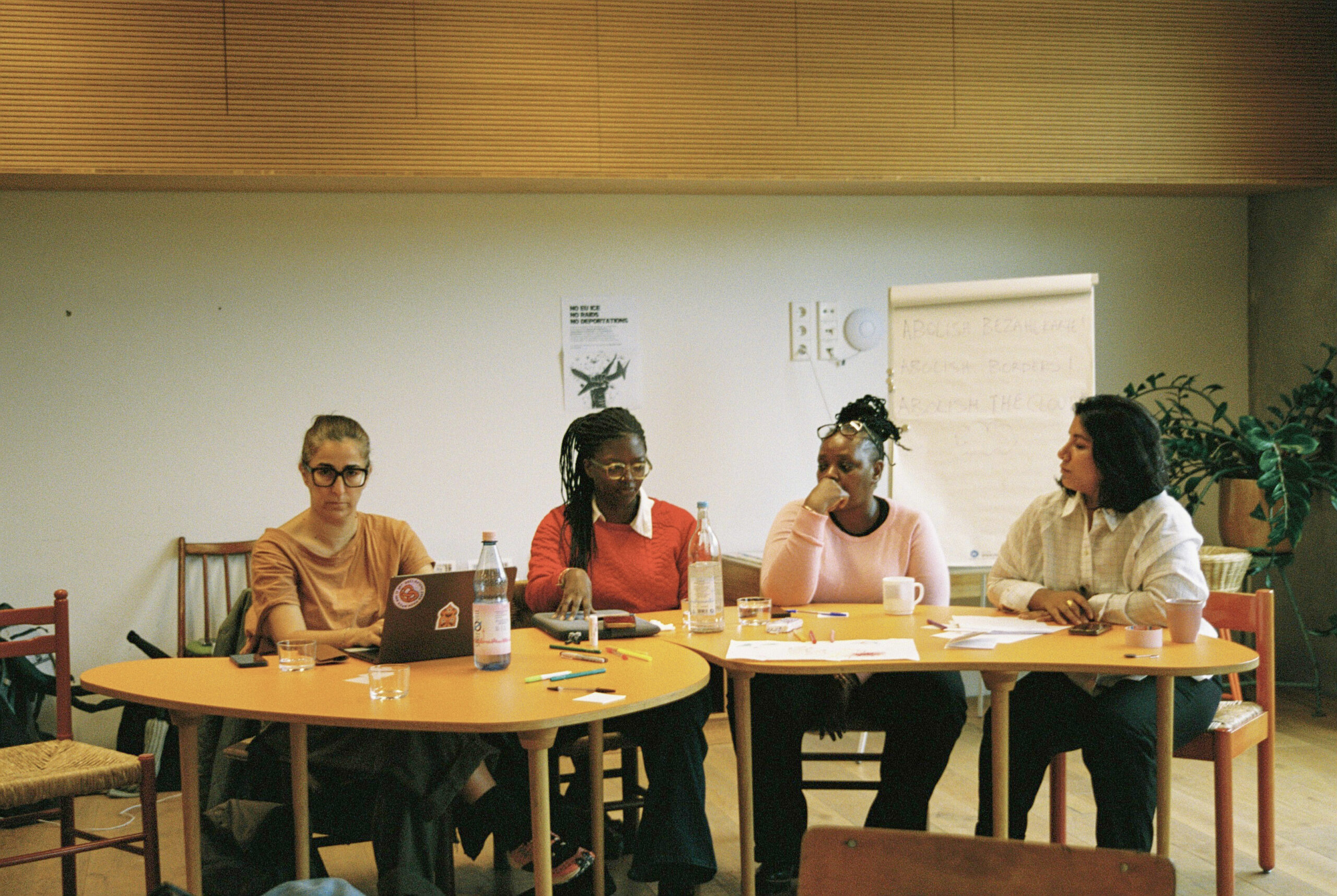
Panel: Abolish the Bezahlkarte, Abolish Borders, Abolish the Cloud with Seda (Titipi), Laurence (Weaving Liberation), Jennifer (International Women* Space) and Sarah (Equinox).
We have been drawing on abolition as a method for guiding our organising, informing our practices to contest the changing forms of carceral structures and technologies. Abolition orients us toward what we would need to build in the absence of these punishing, surveillant and extractive “prison fixes”. As put by Ruth Wilson Gilmore in Abolition Geography:
“Abolition is a fleshly and material presence of social life lived differently.”
We found this in Germany, where resistance efforts led by coalitions of migrant-led organisations, such as the International Women* Space, solidarity groups, and everyday business, collectives and organisations demand the abolition of the Bezahlkarte, alongside building community exchange infrastructures to provide people with cash. The incredible, community-led movement surrounding this is something we all felt part of, inspired by, and realised the urgent need to protect and support.
What’s next?
The Berlin Operations Room followed a year of research and conversations, initially within the Tech Infrastructure Coalition and then with an expanding constellation of people (users, researchers, organisers, technologists, activists and artists) interacting with the Bezahlkarte and with related examples of computational infrastructure. The Operations Room is part of an ongoing attempt at collective understanding and articulation, and towards coalition-building, resistance and imagining around these new frames we create collectively.
With each of us accustomed to our own ways of practising resistance, bringing this coalition together meant working through the disparities between our groups’ approaches, experiences and habits. To find a ‘common language’ that would tie us took some back and forth, a few moments of discomfort and a lot of time spent together.
As we planned for the Operations Room, centering the stories of the people using the Bezahlkarte kept us anchored as a group and helped us overcome some of the disconnects that exist between the worlds of research and grassroot organising. We collectively sought to build from those gaps instead of enforcing a single narrative or way of doing.
The gathering closed by looking forward, projecting the how of continuing this collective work through proposals to expand the Tech Infrastructure Coalition’s research work and its dissemination among and beyond those gathered; to facilitate additional spaces for collective learning and co-conspiring, particularly on the intersections among the digital, the financial and the carceral; to support the organising against the Bezahlkarte, build joint efforts around campaigning and narrative change in Germany and elsewhere against infrastructural power and towards community power and liberation; and to support ongoing coalition-building efforts and collaboration that continues to span a range of experiences and positionalities.
The Tech Infrastructure Coalition was created to understand, engage and resist how, in a context of rising militarism and techno-fascism, the digitisation of society is transforming public and private institutions. It works in broader coalitions, with communities, scholars and technologists to understand the stakes of an increasingly digitised society through the lens of infrastructural power, and to explore opportunities for collective action and re-imagination.
International Women* Space is a feminist, anti-racist, political group in Berlin, fighting patriarchy and documenting everyday violence, racism, sexism and all kinds of discrimination. IW*S was formed in December 2012 during the Refugee movement’s occupation in Kreuzberg. The group focuses on organising and making visible the stories of refugee women.
Thank you to the Spore Initiative, who kindly hosted us for the event.