Building Power Amidst Crisis:
Orienting to Care, Connection,
and Alignment
The Equinox Team
14th August 2026
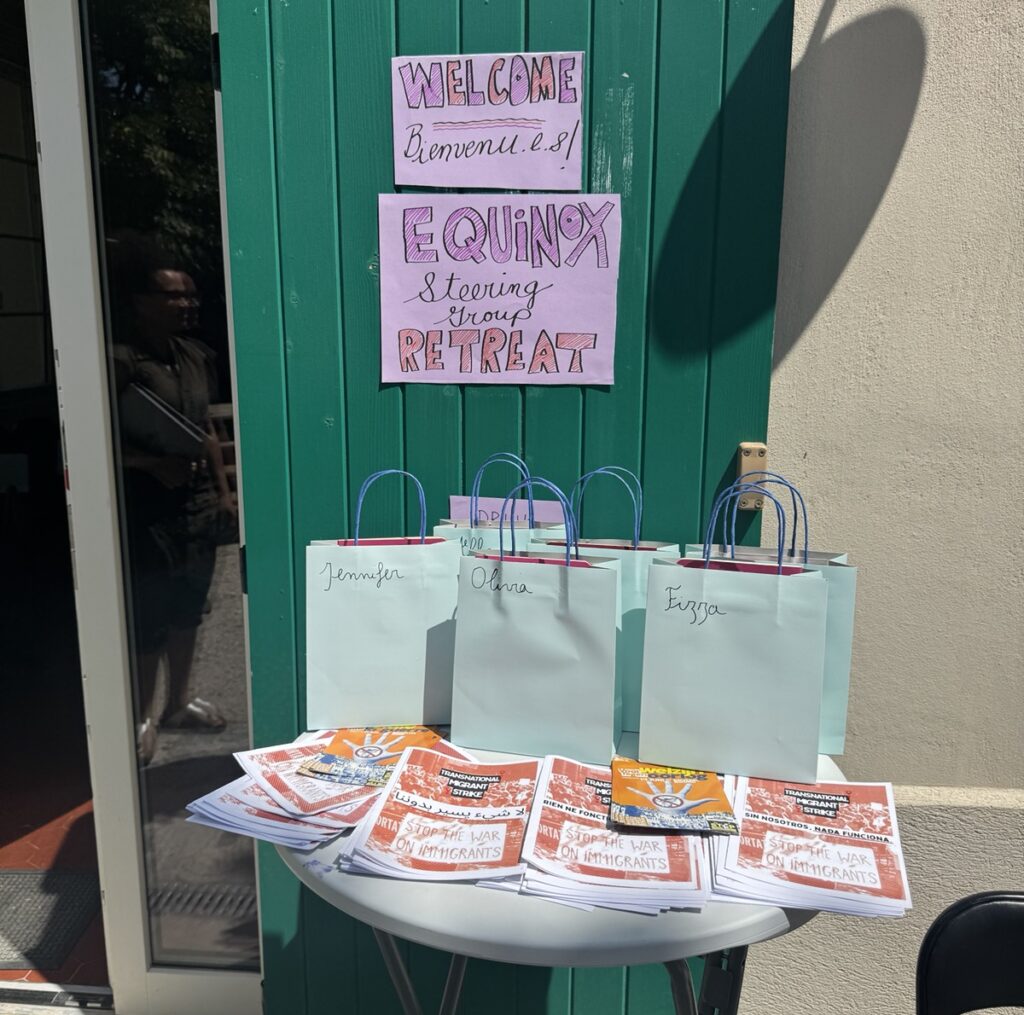
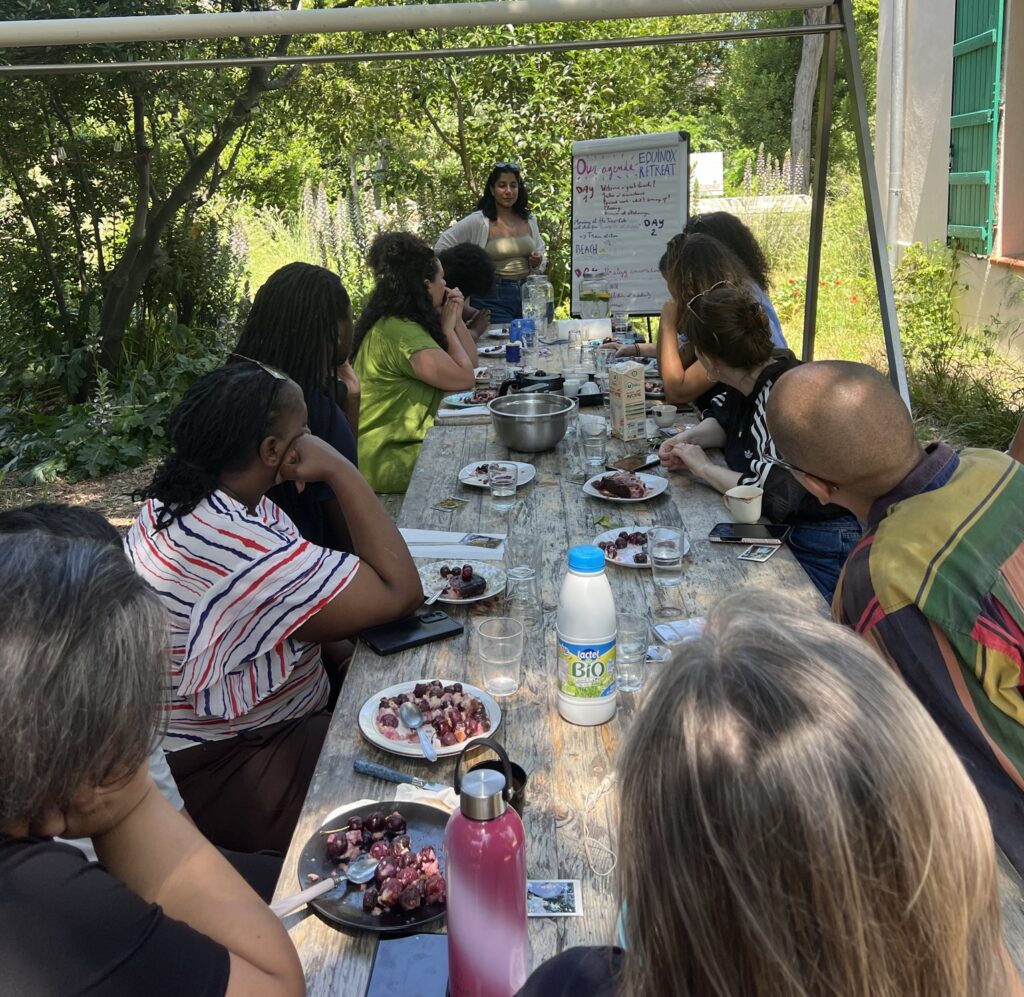
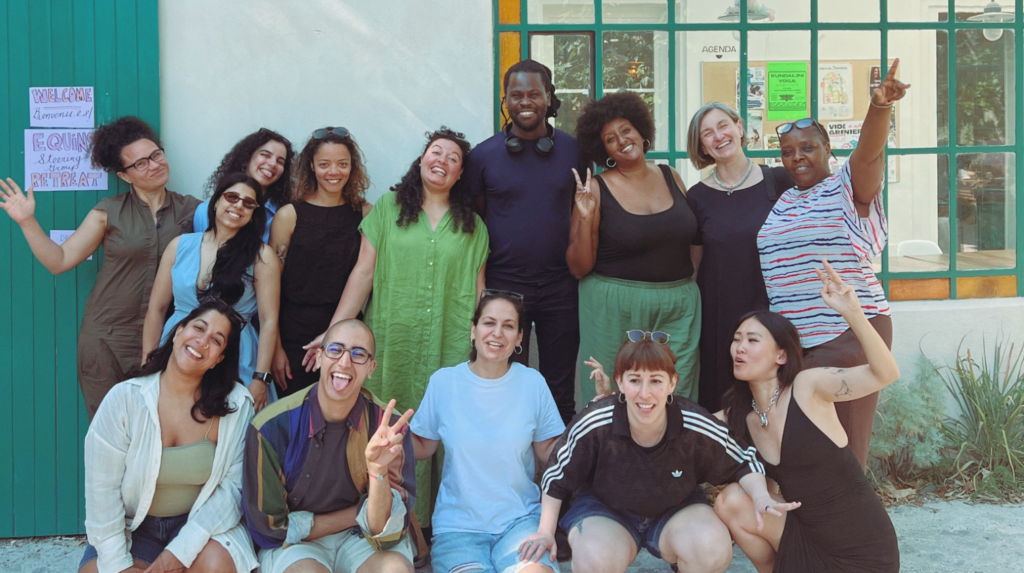
At our annual steering group retreat in Marseilles, we took time to reflect on “the how” of Equinox – how we work, relate to each other, and respond to the chaotic times we live in. We share thoughts from our team, board, and steering group in answer to some big questions and challenges for building power.
As a queer, feminist, racial justice organisation, Equinox works at the crossroads of many issues and movements – from gender, migrant, and queer justice, to challenging militarism and the infrastructural power of technology companies, and toward the redistribution of public funds for better economic, social, and environmental needs.
We work using a mixture of advocacy, campaigning, coalition-building, and narrative change. But refusing to confine our work to singular themes or methodologies means our scope is large, and in a time of multiple crises, everything hinges on how we build power, alignment, and connection with others.
What is advocacy in fascist times?
Rising far-right political power poses major challenges for all organisations using advocacy to further social justice. There is a bigger consensus than ever for carceral migration policy, ramping up the security state, centralising corporate interests in policymaking, and the repression of civil society and activism.
In this context many organisations are forced to rethink how they engage with political power and institutions like the EU. Shifting majorities make it harder to ‘win’, yet, the stakes are higher than ever for survival and resistance. The “new normal” now includes deporting people to places they have never been, and the criminalisation of people saving lives, protesting genocide and contesting data centres.
One of the most present examples of the narrowing space for effective advocacy is EU migration policy – where now the far-right sets the agenda, legitimising offshore prisons, racial profiling and child detention in ways we have never seen. In June, the European Parliament adopted the Deportation Regulation and chants of ‘send them back’ erupted amongst the house, with a far-right politician announcing ‘the era of deportations has begun’.
What does meaningful advocacy look like in this climate? We’ve been challenging a tendency of civil society to shift with the changing political landscape, adhering to rather than resisting this new normal, and advocating for limited reforms as ‘what is possible’ is seemingly diminished. But we know that it is the failure of the strategies of concession and compromise that got us to this point – and marginalised communities pay the price.
We’ve been pushing for critical reflection on reformism amongst advocacy organisations. Whilst some believe it is crucial to maintain existing avenues of making change – engaging with the legislative process, proposing amendments to ‘reduce the damage’ of these laws – the ecosystem may be legitimising fascist policies in doing so. At what point do we set red lines around what civil society will and will not negotiate? As what is considered ‘normal’ shifts, advocacy organisations risk losing sight of our visions in favour of ‘wins’ we only rally around because they are considered ‘achievable’ within the status quo.
Building from within: nourishing coalition
To reverse this direction, we’ve been reflecting on ‘alignment’ and ‘building from within’. Building from within requires us to rouse an alternative vision of the world and firmly orient organising strategies around it. That vision guides us to who we should be building with – who shares that vision, or a similar one? Who is similarly (not equally) affected by the structures we want to change? How do we reach those organisations and communities, and on what terms? How do we align our visions, strategies, and tactics, so we might be more effective together?
Alignment work will mean more focus on advocating to each other – preaching to the choir – focusing on connection and growth amongst those closest to us, as opposed to reforming, diluting and compromising in hopes of converting those who disagree with us based to a static understanding of who has power.
This moment has required us to transfer the energy we spend on ‘traditional’ advocacy toward political education, coalition-building, and campaigning. The time we previously spent trying to change the minds of politicians is now used strengthening connections between migrant-led organisations, pushing for unequivocal messaging and alignment amongst advocacy organisations, and holding info-sessions with grassroots and frontline support groups.
Our goal is no longer only about winning the argument but expanding who ‘we’ is – and his requires a change in our skillset. We are building our capacity to bridge across issue-focus, organisation size and style, location, identity and language barriers. Our approach to coalition (as with the Migrant Justice Community of Practice) centres depth over width, requiring us to build coalition infrastructure and practices that meet the needs of ‘us’ – collective ownership, and shared accountability models where every member of the coalition plays a part. But also, we need to grapple with concrete limitations that make distributed models difficult to attain – including very real differences in access to resources and time.
Coalition work requires an intentional turn away from siloed organisational practices typical of the NGO ecosystem, where competition and maintaining a ‘niche’ are so central to fundraising and organisational survival. Our coalition work has challenged us to rethink our identity not as a singular organisation but as necessarily interdependent and blurred with that of our partners.
Our role in global justice struggles
An ongoing reflection for us relates to where we build power. We are based in Brussels, the seat of the European Union and heart of the imperialist core. What responsibilities do we have, as a result, to address the EU’s complicity in ongoing colonial dynamics, war, extractivism, and atrocities?
Whilst a central element of our work has been exposing the EU’s imperialism, we reckoned with the need for a more systematic approach to our global solidarity work, proactively building relationships responding to calls for solidarity, grounded in a clear analysis of how work in the EU can mitigate and prevent harm elsewhere, or advance broader global justice fights. This will become central as the EU expands its commitment to resource extractivism and militarism, and, as we saw in reaction to Ceuta, seeks to instrumentalise and expand partnerships with non-EU countries to externalise its borders and reinforce its carceral turn in migration policy.
Our existing connections to organisers outside the EU have taught us that real solidarity requires us to reject reductive analyses that ignore repression of non-EU governments under a banner of anti-imperialism, recognising that many movements fight on many fronts.
Communications for power building
As we shift from advocacy toward coalition, our communications practices have also had to change. This political moment requires a bold and unapologetic narrative, but also communications that contribute to our power building – helping us broaden our mobilisation through accessible and strategic messaging.
In building We Keep Us Safe we put all of this into action. A product of coalition and emerging from the collective imagination of 40 migrant-led groups and activists, the campaign challenged the EU’s deportation law by showcasing the growing collective resistance against it. Connecting over 200 organisations working together against this regime, we rejected ‘polite advocacy’ as unfit for the moment, and instead unequivocally demanded rejection of this fascist law – using tactics of name and shame, mobilising the public to take concrete action, and taking to the streets. Whilst this 6-month campaign did not reverse the law, it mobilised hundreds of thousands of people to voice dissent, and forged new, transnational and cross-movement relationships that will endure.
Perhaps most importantly for us, we are learning how powerful collaborative communications can be for building trust and solidarity across different groups, forging a collective coalition identity to counter the isolation that the powers that be want us to feel.
Care, not control
The thread tying together all reflections on the “how” of us is how we meaningfully instil care into how we work. At times overwhelmed by the seemingly limitless scope for organisational policies and processes, it was a helpful reminder from our Steering Group that collective, continual, relational practice will define us in the end. As we continue to slowly and intentionally grow our organisation and coalitions, our challenge is to reorient time and energy away from our content to the work that caring practice requires, including more spaces to build up the skills and infrastructure of care – such as facilitation, mediation, transformative conflict practices, resourcing coalition, and collective learning. As our Steering Group member, Selam Tesfai, reminded us, “we can dismantle but we need to produce our rituals.”
Thank you to everyone for joining us at the retreat – to the Equinox Steering Group and Board for sharing wisdom that will fuel us another year, and to Jihed Brirmi and Les nuages étaient sous nos pieds for receiving us in Marseille.